
The job of a release agent is to prevent adhesion between two surfaces. In particular, there are many types of release agents. And when it comes to finding the right release agent among these wide varieties, things become a bit more interesting. In this case, the topic of water-based vs. solvent-based mold release agents is a critical one to discuss.
Both water-based and solvent-based mold release agents have their unique advantages. However, we must also acknowledge their limitations. One’s limitations are the advantages of the other.
Therefore, it is crucial to understand how each mold release agent works. You must be aware of their benefits and limitations to determine the most suitable one. This article will help you throughout your journey.
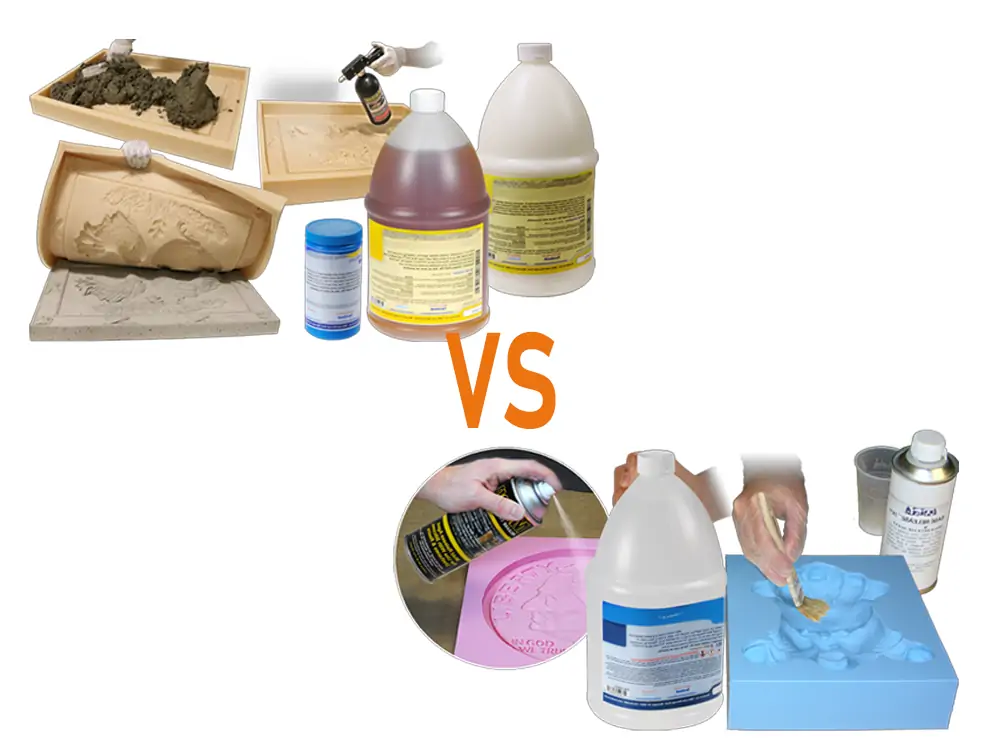
What is Water-Based Mold Release Agent?
A water-based mold release agent utilizes water as its fundamental element. Instead of using harmful chemicals or petroleum, this mold release agent mainly uses water-based solvents and surfactants.
Water-based release agents are typically very easy to apply. You can either apply it by spraying or brushing. Besides, you can also wipe it and use flow coating methods. Note that flow coating is an effective method of creating a coating on mold surfaces. It allows liquid to flow over the surface of the part.
It creates a barrier between the mold and the molded parts. It typically helps in facilitating a safe extraction. Additionally, it prevents the parts from sticking or being damaged. As a result, it reduces the likelihood of defects and enhances product quality.
Water-based mold release agent is a highly sought-after option for nearly all users of concrete products. Besides, you may deploy it in other applications. In this case, you can consider rubber, plastics, and polyurethane foams.
People are gradually shifting from using solvent agents to water-based ones. Among various reasons, the most crucial ones are eco-friendliness and ease of use.
Benefits of Water-Based Mold Release Agent
Due to its eco-friendly and safe properties, people prefer this agent for various molding work. It is suitable for use on molds made from composite, rubber, or metal. Additionally, it works well on materials such as plastic, tires, seals, and gaskets.

Environmentally Friendly
Water-based mold release agent is safe for the environment. It typically has fewer hazardous elements. Additionally, it does not contain VOCs or other harmful chemicals. When making such a mold release agent, it meets all the requirements of health regulations. This chemical is also safer to use, with no reported side effects.
Non-Flammable
Water-based mold release agent is almost non-flammable. When making it, we typically do not use any flammable items. In certain circumstances, we may need to include a few flammable items. Due to this, water-based mold release is safer for various industrial applications. They do not pollute the air, as they are eco-friendly.
Clean Method for Molding
Water-based mold release agent is easy to clean. You can use regular soap and water. Unlike other agents, it does not require different chemicals to clean the mold surface. As a result, it reduces the number of chemical residues on the molds. This way, you can lower product defects.
Versatility
You can use water-based mold release agent for a wide range of materials. It is widely used in automotive, medical, and household industries. Besides, you can also use it in the footwear, furniture, and construction industries.
Cost-effectiveness
Water-based agents are affordable and more economical in the long run. They make mold last longer, clean up faster, and restrict production breaks.
Limitations of Water-Based Mold Release Agent
Although water-based mold release agents offer many benefits, they have some limitations. It is familiar with every mold release agent. What we have to observe is the miniaturization of constraints.
Water-based mold release agent are typically complex in their composition. Because of this, it is tricky to make them.
It is less stable, which is why it is more challenging to form the correct film on the mold surface. Note that this film refers to the barrier on the mold surface that prevents sticking.
Moreover, water-based release agent has shorter shelf lives. Since it contains water, there is a significant possibility of bacterial growth. As a result, product quality tends to deteriorate over time.
A water-based agent may not provide the same level of performance as other agents. It also performs poorly in extreme heat conditions.
A water-based mold release agent is not compatible with various mold materials. Besides, it takes a longer drying time.
What is Solvent-Based Mold Release Agent?
A Solvent-based mold release agent uses petroleum refining as the primary carrier. It features active elements that easily separate the mold from the molded parts. These solvents are typically derived from hydrocarbons or alcohols. When you spray the agent, it evaporates immediately. Later, it forms a thin layer on the surface, acting as a barrier.
The agent allows the smooth release of every product and protects them from wear and damage. It offers compatible power efficiency for release and rapid drying. You can apply it in areas with high humidity or short production cycles.
Solvent-based release agent is ideal for many uses. You can think of automotive, electronics, and aerospace. Regarding materials, solvent-based release agents are ideal for use with rubber, plastic, and ceramics. It is also suitable for use in the paint industry.
One of the most crucial reasons people choose it is its fast-drying time. It can also provide an excellent surface finish. For complex molding, this release agent works exceptionally well. Thus, it is widely used for small and complex shapes of molded parts.
However, solvent-based release agents involve some hazardous chemicals. Therefore, it should not be used without gloves or in an exposed environment. You must ensure a controlled environment when using it. Follow the safety measures and use an appropriate ventilation system. Despite this risk, this release agent is an ideal option for high-precision and high-speed work.
Benefits of Solvent-Based Mold Release Agent
There are many good things about solvent-based release agents. These benefits typically make it a great option for many uses. It has excellent quality for mold release. People often choose it for high-speed output. Also, it works excellently with complex shape molds. You can use it on many different types of materials, including plastics, rubber, and thermosets.
Quick Release
Using a solvent-based release agent makes the mold release process quick and clean. This makes things more productive. Ultimately, you can ensure on-time delivery. It is versatile and works on a wide range of materials.
Releasing Properties
When using solvents, the release agent typically develops strong release qualities. It has better mold release abilities than water-based ones. It quickly forms a film on the surface, preventing mold from adhering. Eventually, it makes the separation very easy.
Excellent Surface Finish
Solvent-based mold release agent also creates a smooth and clean surface finish. It especially works great for small and complex shape molded parts. This release agent can help you achieve the best quality finishing. Of course, it is necessary for various sectors that need delicate components.

Works Well in Humid and High-Temperature Conditions
This agent is unaffected by humidity. As a result, the agent is suitable for various environmental conditions, including high-moisture areas, without any safety concerns.
Additionally, it can work well in a hot mold. The solvent base can withstand high temperatures. This makes it ideal for demanding production needs.
Limitations of Solvent-Based Mold Release Agent
Solvent-based agents contain VOCs, which may affect your health and the environment. They can pollute the air, contaminate the soil, and water. Compared to water-based agents, it is less environmentally friendly and poses a significant health threat.
It is not only environmentally risky but also highly flammable. If you do not handle or store it carefully, it may cause fires.
Allergens used by agents based on solvents can have terrible smells. It may exacerbate the situation for those who are sensitive to strong odors.
These are the most concerning limitations of solvent agents. To avoid these problems, you should follow the precautions every day before using them. Following them might help you avoid health risks.
Water Based VS Solvent Based Mold Release Agent: Which One Would You Prefer?
Choosing between these two agents depends on your needs. Each of them carries its strengths and operates smoothly in particular areas and conditions. If you use them under certain situations, you may achieve the best output. If you know your priorities, selecting the right molding agent becomes easier. Therefore, understand your requirements first to enhance productivity.
Performance
In terms of high performance, solvent-based agents are perfect. It ensures a fast-drying, high-quality finish and smooth release. Furthermore, it is ideal for high-speed production. However, if your process requires slower drying and yields cleaner results, it is advisable to opt for water-based agents. It’s a good choice in such conditions.
Environmental Impact
Solvent agents are highly impactful. It has numerous side effects, including environmental threats. On the other hand, if you need a safe, eco-friendly solution, choose a water-based agent. It does not contain toxic or flammable elements and has a low VOC content. Overall, water-based agents are far safer than solvent-based agents.
Cost
For a low-cost budget, solvent-based agents are perfect. You may achieve quick results using it. On the contrary, water-based agents may seem expensive, but you will find them beneficial in the long run. If you need long-term savings, reduced cleaning, and a longer mold life, then opt for a water-based agent. It supports regulatory compliance as well.
Contact Us Today!
If you require additional information on the topic, please contact us via email, phone, or our website. Our friendly team is always ready and pleased to assist you. We provide expert advice to help you overcome any problems you are facing.