
We all more or less know about the use of concrete, which is mainly used in construction. From creating small blocks to large sculptures, we process concrete in many ways. One common way is by using concrete forms. However, one of the biggest problems with it is sticking. That’s where the proper use of a concrete form release agent comes in.
Concrete may often stick to the surface of the form during the process. It can make the work more difficult. In this article, we will mainly focus on how to keep concrete from sticking to the forms or molds. We hope this article will be useful in your work and help you achieve better results.
Understanding Concrete Forms
Concrete forms are the shapes that hold wet concrete until it becomes hard and takes the proper shape. They can easily withstand heavy pressure from wet concrete. With them, you can achieve the exact shape, dimensions, and surface finish of the concrete surfaces.
Concrete forms are usually made of wood, aluminum, steel, and durable plastics. However, wooden forms are often used for concrete forming. Using them allows you to achieve the exact shape, dimensions, and surface finish.
Concrete forms work by containing wet mix when poured. You can place them anywhere, brace them tightly, and pour the concrete material later after applying a concrete release agent. External bracing typically keeps the mold aligned and supports the walls without bulging. Also, tight joints prevent slurry leakage during production. Once the concrete solidifies, workers strip the forms away from the mold to remove the product.
These concrete structures are highly demanding in civil sectors, building engineering, and residential and commercial sectors. People rely on them to build strong foundations, columns, slabs, and so on. They can also be used to produce standard concrete pipes, staircases, and bridge girders.
How to Keep Concrete from Sticking to Forms?
There are various ways to keep concrete from sticking to the forms or molds. However, the most crucial way is to use the right concrete form release agent properly. You should also consider using the right form material and regularly maintaining the equipment.
Use a Suitable Concrete Form Release Agent
A release agent is one of the most vital components for completing a formwork. Manufacturers apply it to forms before pouring wet concrete, creating a non-sticky barrier between them. This barrier typically prevents the concrete from sticking to the surface of the form. However, the releasing agent may vary. In most cases, wood and steel are used. With a releasing agent, not a single part remains sticky to the forms. If it still sticks, either you didn’t apply the correct RA, or you did it wrong.
In terms of its significance, it protects both the concrete finish and the formwork. This step matters for a clean, smooth, and damage-free outcome. It eliminates surface chopping, reduces bug holes, and extends the mold lifespan. Common applications include walls, beams, slabs, and other decorative items.
Release agents are generally chemical-formulated substances used for barrier coatings. They come in many types based on the formulation strategies. Chemical release agents react with cement paste. Barrier agents form films with oils or emulsions. Water-based agents offer a low-odor, eco-friendly solution.
The application depends a lot on the form material, surface finish, and environment. You also have to consider the work site conditions and weather. Before selection, verify the drying time and temperature limits. Always match the agent with your project needs and local regulations.

Oil-Based Release Agent for Concrete
An oil-based concrete formwork release agent uses minerals, oils, and other components to form a coating on the surface. This way, the slick coating prevents wet concrete from sticking to the formwork. They work well on wood and steel forms where basic jobs like rigorous finish quality do not matter. Oil-based agents cost less than other options and are applied for slabs, footings, and outdoor sites.
Water-Based Release Agent for Concrete
A water-based release agent utilizes water emulsions, oils, and polymers to generate a non-sticky barrier. As mentioned earlier, it offers low odor, easy cleanup, and low VOC emissions compared to other agents. It makes the agents suitable for indoor use or enclosed spaces. From architectural panels to concrete and decorative items, you can use it anywhere.
Chemically Reactive Concrete Form Release Agents
A chemical concrete form release agent contains fatty acids as the main ingredients. It reacts with the free lime in wet concrete to form a fatty acid soap film. This layer prevents chemical bonding and the formation of different types of surface voids. This agent works best on steel and plastic forms. Thus, it finds application in precast panels, columns, and high-quality surface finishes.
Choose the Right Form Material
The right form material and its quality heavily affect the proper release of concrete objects. Select the form material based on your application. Materials like steel, aluminum, and coated plywood can resist sticking smoothly. You may also use concrete formwork if needed. The right material reduces damage during removal.
Clean the Forms Before Use
Before pouring the concrete form release agent, make sure the surface is free of dust, dirt, and hardened concrete. Dirt on the surface prevents proper barrier creation. A clean surface is essential, since it allows proper removal without sticky residue.
Proper Use of the Releasing Agent
Apply the release agent carefully, and make sure to maintain uniform, thin coats over the mold surface. In this case, avoid pooling or dripping the agent. If needed, wipe off the surface to remove excess release agent and avoid defects in the parts.
Keep the Forms in Good Condition
Inspect the forms after every use for cracks, damage, rust, and warping. Always clean the mold before and after production cycles. Never leave it contaminated. Well-maintained formwork ensures proper shapes, increased lifespan, and quality finishing.
Remove Concrete Forms at the Right Time
Don’t leave the form for too long. Extended contact makes the concrete stronger and stickier. Stripping such a strong portion from the mold may reduce the mold’s sufficient strength and make it weaker for later use. Therefore, always follow the manufacturer’s guidelines for proper timing.
Follow Proper Concrete Curing
Always maintain moisture and temperature during hydration. Curing is also a crucial step here. Cure concrete slowly and evenly. Proper curing prevents shrinkage, cracking, and poor bonding while improving strength and ease of removal.
Best Concrete Form Release Agent
The best concrete form release agent depends on your form type and the type of concrete mix. In this case, both oil-based and water-based release agents work best. Amino Release agents MK-CR and MK-707 are highly recommended for this use.
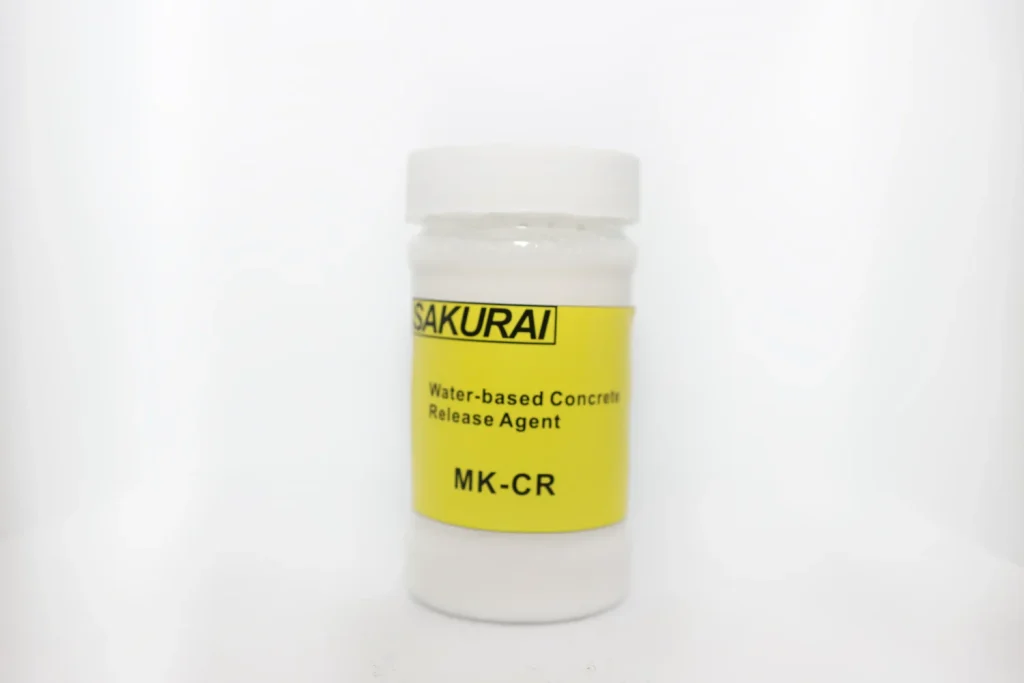
MK-CR is a water-based release agent for concrete forms manufactured by Amino Release. It is a white, milky liquid and is available in 25L to 200L drums, as required in the package deal. You can apply it using brushes or a spraying method on concrete forms. The agent forms a thin film and does not react with concrete, facilitating a swift demolding.
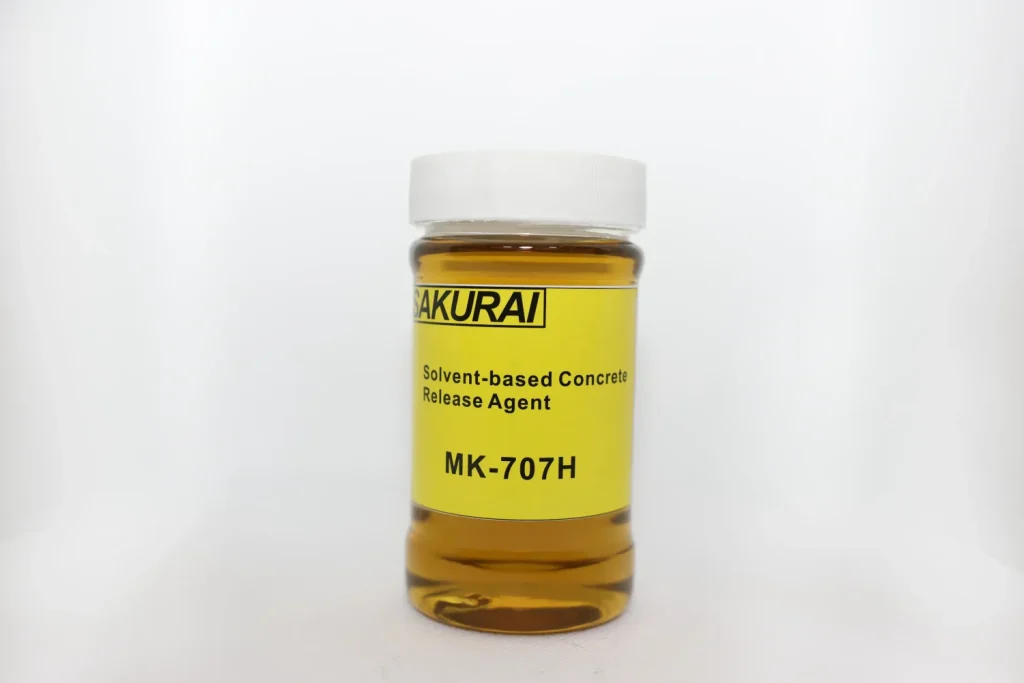
MK-707H is an oil-based Amino Release Agent that uses key chemicals for defect-free separation. It creates a protective thin film between the mold and wet concrete. It is available in 25 L to 200 L packages per drum, supporting both manual brushing and spray pouring.
How to Apply Concrete Form Release Agent
Simply applying a release agent to the form is not enough to eliminate sticking problems. You must know how to apply it correctly and whether you are using the right amount. Most beginners get confused at this stage. Some apply the layer too thick, while others fail to cover the entire surface properly. That is why we always recommend following the process step by step.
Step 1: Prepare the Surface
The first thing you need to ensure is that your concrete form is properly prepared. Remove the old concrete, dust, rust, and dirt. You can use a scraper, wire brush, or pressure washer. Dry the forms completely to ensure the trapped moisture does not prevent the release agent from working correctly.
Step 2: Apply the Concrete Form Release Agent
You can use a low-pressure sprayer to do this work. Most concrete forms are relatively big, which may take a lot of time if you apply the RA manually. You could use the sprayer with a wide, fan-type nozzle for a fine and uniform mist. Try to apply a very thin coat, about the thickness of your hair. Then, wipe the bubbles, runs, or drips immediately. You can do it with a microfiber mop or clean cloth so they do not cause surface defects or weak spots on the concrete.
Step 3: Dry the Release Agent and Pour the Concrete
You must wait for the release agent to set up properly. To know the right time, you can contact your release agent manufacturer. Avoid walking on or touching treated forms before the concrete pour.
Contact Us Today!
For more tips on how to get an even coating, you can contact our customer support. We will connect you with an expert. Besides, if you are interested in other types of releasing agents for molding applications, please visit our products page. Amino release agent specializes in making RA for molding materials and chemical matrices. We also offer various accessories for releasing agent applications.