Composite molding is widely used to produce strong, lightweight components. You may think of the bumpers, body panels, and hoods on your car. Also, think about hulls and decks used in the marine industry. All these composite parts are produced through precision composite manufacturing. Here, the PVA release agent plays a crucial role.
The use of PVA mold release agent ensures a high-quality final product. When the composite is molded, removing it from the mold is tricky. Here, the PVA release agent allows smooth removal of the part from the mold. As a result, the use of this chemical prevents parts from sticking together, getting damaged, or losing their finish.
What is PVA release agent?
PVA release agent is a water-based liquid used in composite manufacturing. PVA stands for polyvinyl alcohol, which is a water-soluble synthetic polymer.
PVA RA primarily serves as a barrier between the mold and the molded part. It prevents the hot-molded material from contacting the mold surface. The barrier is so thin that it doesn’t affect the dimension. As a result, it prevents the molding material from sticking to the surface.
PVA mold release agent is one of the oldest and most reliable solutions. And it is widely used in composite manufacturing. When applying, first choose a suitable method. You may think of a spray gun, a brush, or a sponge. After applying, give it a while to dry. When it dries, water evaporates, forming a tough, sacrificial film. This film is crucial for complex molding.

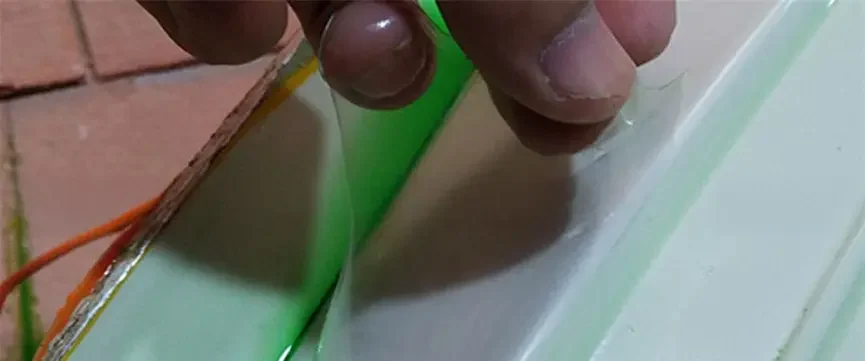
One unique thing about this RA is that it transforms the color when it dries on the surface. It slightly tints blue or green, which eventually helps you to see the coverage. It typically reduces the risk of costly damage.
Most manufacturers rely on this RA to ensure better production quality. It makes composite part separation easier. It is especially well-suited for handling fiberglass, resins, and carbon fibers.
Manufacturers rely on this mold to ensure better production quality and easier part separation. It’s a popular choice, especially when you are working with fiberglass, resins, and carbon fiber.
How do PVA release agents Work in Composite Manufacturing?
A PVA release agent works by forming a physical barrier on the mold surface. As the coating dries, water and alcohol evaporate on their own. Thus, it creates a thin, impermeable, plastic barrier. This film plays a prominent role in preventing resin from soaking into or contacting the surface. It typically acts as a shield.
Its chemical structure is highly efficient and heat- and solvent-resistant. Even during curing, it does not react with polyester or epoxy resins. When the part is ready, you can remove it from the mold. You may also clean off the mold surface with water.
PVA vs Other Mold Release Agents
PVA mold release spray is one of the most affordable release agents. It is easy to apply and perfect for the open-mold process. In contrast to wax-based release agents, it may provide a high-gloss finish but is difficult to apply and requires time and preparation.
Compared to semi-permanent release agents, PVA is cheaper. Semi-permanent agents last longer and are suitable for high-volume production. However, it is more difficult to clean than to remove PVA release agents. At the same time, semi-permanents are for rapid work. Many of the professionals use wax and PVA agents to ensure ultimate protection.
Why should you opt for PVA release agent?
There are several reasons to opt for PVA. However, the right choice still depends on what materials you are using. Also, even with composite materials, you must carefully choose the right grade of PVA RA.
Great Releasing Properties
PVA release agents have a strong release property. It acts as a barrier, preventing sticking. It typically prevents resin from bonding with the mold. Each part comes out with precise, smooth, and defect-free surfaces.
Reliable physical barrier
When you apply the liquid onto the mold surface, it dries into a tough, plastic-like skin. This layer can provide a physical barrier and strength that wax cannot match. It is usually an ideal solution for complex shapes where there is a high possibility of resin trapping.
Complete Resin Protection
PVA release agent provides complete protection against resin adhesion. It is chemically resistant to styrene and other harsh solvents. This type of protection is vital for the fine finishing of your tooling.
Versatile Solution
Polyvinyl alcohol release agents are versatile and support working with polyester, epoxy resin, and vinyl ester. This agent is also suitable for a wide range of industry applications. Examples include marine, automotive, and aerospace, among others. You may also apply it using a brush, a spray, or a wipe.
Support Water Cleanup
PVA clean-up after production is quite easy and fast. Besides, it is an eco-friendly solution for every manufacturing industry. Since the agent is water-soluble, you only need warm water to wash the mold off the surface for product removal. It eliminates the need for harsh chemicals or scrubbing.
Necessary Tools and preparation before molding
Before applying the mold release agent, it is necessary to arrange all the necessary tools. We can classify these tools into three main categories.
Application tools
You need to have all the required tools ready before starting the process. Using the right tools also ensures a professional finish. In this process, you will need a soft brush, a spray gun, and a clean cloth. If you are working with small molds, microfibers, or sponges, it works best. Make these items present beforehand.
Surface cleaning
The molds must be cleaned and free of dust before you begin. Therefore, you must prepare the surface. You can use a dedicated cleaner or isopropyl alcohol for the surface. Molds are sensitive because even a fingerprint can create a hole or agent to bead up.
Environmental control
Conduct the process in a controlled, dust-free environment. Ensure a good ventilation system is in place. Keep the temperature between 20°C and 30°C for optimal outcome. Avoid humid areas, as they can slow production.
Masking Tape
Always use high-quality masking tape to protect the mold’s edges. This step prevents PVA release agents and resin from spilling onto non-targeted areas. Clean, taped edges make wedges simpler to insert and remove without harm.
Step-by-step Application Guide
Once all the tools are prepared, prepare yourself for your step-by-step application process. If you are a beginner, we recommend following the manufacturer’s guidelines. Do it in a controlled environment to avoid contamination.
Prepare the mold
Make sure the mold is properly ready before use. Remove dust and oil from the surface. You may use either a lint-free cloth or a specialized cleaner. After cleaning, make sure it is dry and place it in a stable, temperature-controlled area.
Apply Mold wax and Release Agent
Now, apply high-quality mold wax and buff it to a shine. Apply it for 2-3 layers. Once the layer is cured properly, apply PVA release agent. Use a spray or wiping method and a stroke for total coverage. This dual-layer method makes it a reliable solution for preventing sticking.
Allow layer-by-layer drying
Let the layers dry one at a time. Wait until each layer dries completely before applying another. It typically takes 15 to 30 minutes, depending on the humidity level. Each film should be track-free and smooth.
Laminate
Once the layer is dry, the mold is now ready for the lamination process. You can apply gelcoats or resin onto the surface. Thus, the material would take shape, and the layer would separate it from the surface.
Post-Molding Guide
Once molding is done, there are also standard ways to perform post-molding activities. You must use standard tools to remove the molded part from the mold. If you do it incorrectly, you could damage the part.
Carefully remove the product
Make sure the resin is fully cured. Gently flex the mold edges to break the seal. Use a plastic wedge or compressed air to lift the molded product. Start from the edges.
Remove PVA residue
As you know, the PVA release agent is water-soluble. So, you need to rinse the part with warm water. Here, you can use a soft cloth to wipe the film off. The part should be free of PVA residues before finishing.
Inspect the Mold and Product
After separation, inspect the finished part for any defects or bubbles. Also, check for any scratches or resin buildup in the mold. Ensuring both are in high-quality condition extends the lifespan of both mold and product.
Clean and Re-prepare for the next run
Wipe the surface clean and remove any residues. Now apply fresh wax coats to the mold, if necessary. After drying, it is now ready for your next production runs.
Conclusion
For composite materials, the PVA mold release agent plays a crucial role in demolding. It helps create a clean barrier between the mold and the material. As a result, it ensures easy part removal and protects the mold surface.
The release agent alone cannot ensure a high-quality product. You also must do it right. This way, you can ensure the highest product quality and reduce defects.
PVA release agent is ideal for many composite materials, including fiberglass, epoxy, and carbon fiber.
If you are looking for high-quality PVA release agents, consider Amino. The company produces a wide range of mold release agents for different materials. Contact us for more information.